
Sam Goodall was a lucky man. His life had turned around when he somehow landed a job driving a truck for Worldwide Transport. Most employers wouldn’t hire Sam, despite the fact that he was a hard worker, because of his criminal record. His convictions weren’t anything shocking, just a string of possession and assault convictions over the last three years, but Sam had found door after door closed in his face after his time was served.
Sam had faced another rejection – his longtime girlfriend had enough of him, it seemed, and told him so in no uncertain terms over the phone at the jail. Another closed door. Sam had found himself on the road outside the department of corrections facility without anyone waiting for him. He walked into town, and, having nowhere else to go, he went to his mother’s house. He knew his mother wouldn’t turn him away, but would only let him stay with her a couple of nights. He showered and found some clothes he had left from a previous stay and started pounding the pavement. It only took two days to get the new job with Worldwide Transport. Since he didn’t have his CDL, Commercial Driver’s License, he wouldn’t be able to drive the big rigs but they had many box trucks that he could drive. In fact, they said they preferred box truck drivers because they had a lot of same day deliveries. The pay was very good, and his mother said he could stay a little longer, for a price.
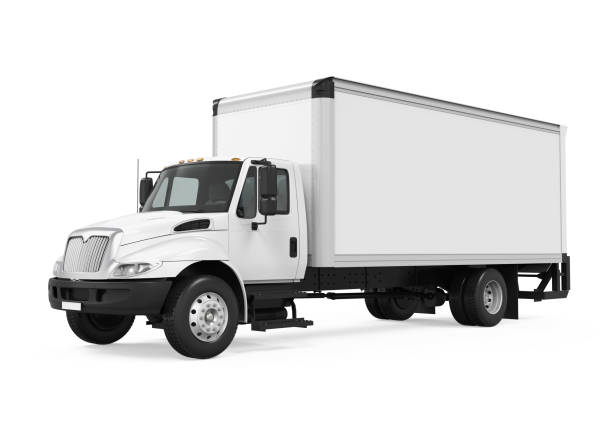
picture of box truck
Sam drove for Worldwide for a week, and his first paycheck was larger than he had expected. He had never worked for a freight company before, so the way they operated didn’t seem unusual to him. Every morning he reported to the main office where most of the trucks were kept. He got his assignment for the day from the dispatcher. The dispatcher, Derek, said hello to him in a gruff voice and handed him his consignment note, or “note”, as Derek called it. The consignment note contained the information of where to pick up his freight and where to deliver it. The note didn’t say what he was delivering, it only had a series of letters and numbers in that space. Sam didn’t care what he was delivering, as long as he got paid. Today, he was to pick up his delivery at a warehouse on B Street, and he was to go to Bay number 3.
When he backed his truck up to Bay 3, Sam knew to sit and wait for them to open the bay door. On his first day, he had made the mistake of going around to the side entrance of the warehouse to tell them he was there and maybe meet some new people. A tall man, at least six foot five, with a beard and baseball cap pulled low over his face had grabbed him and turned him around, ushering him right back out of the door. The man’s arms were massive and he maneuvered Sam like a child. “Don’t come in,” the man hissed, “We have cameras. We know when you arrive. Just sit in your truck and do what you’re told.” Sam started to reply, but the door was slammed shut.
Sitting in his truck now, he tried to remember what he had seen in that brief moment inside the warehouse. It wasn’t brightly lit, and there were tall, shrink-wrapped boxes sitting on pallets blocking most of his view. But he had seen something that bothered him, although he kept telling himself there must be a logical explanation.
His revere was interrupted by the sound of the bay door going up. He looked in his side mirrors, but couldn’t see much. He could hear the freight being loaded into the back of his truck, and heard them close up his truck. A man, wirey and pale, jumped off the end of the bay and walked over to Sam’s window. “You’re all set,” he said and was gone. Sam looked at his consignment note again. He had to drive nearly 250 miles to make this delivery, and he would be expected to get back before they locked up the gates at the main office. It would be close.
As he pulled onto the freeway, he set the cruise control and sipped his coffee. Yesterday, after he completed his delivery, he pulled back into the main office and rolled up the back door of his truck. He was responsible for making sure the truck was clean before he left for the evening. Sam noticed a white substance on the floor of the box. He swept it up and examined it. He decided it appeared to be drugs, cocaine or meth. He threw it away and finished cleaning the truck. The day before that, whatever he was delivering was making the back of the box truck bounce around a little, and Sam wondered what on earth he was delivering. When he cleaned his truck that evening, there was what appeared to be feces on the floor. It stank to high heaven, and it was big. Sam wondered if he had delivered a large animal that day. Whenever he got to his delivery destination, he was told to stay in the truck. The receiver rolled up the back door and either unloaded the freight themselves or had a forklift. Sam was told to drive away after the delivery was taken inside and someone came and told him to leave. He never knew what he delivered, and it seemed to vary day by day, but now he felt certain whatever it was, it was illegal.
The trip was going well, despite all the thoughts that kept swirling around in his head. He had been told that if he opened the truck back before delivery, he would be fired. But how would they know? In a lonely stretch of highway with cornfields on either side, Sam found a pull off used by farm equipment to enter and leave the field. He turned off the truck and sat there for awhile, considering. Then, his mind made up, he got out of the truck and went to the back door. He rolled it up. It was dark inside, and at first he could see nothing. But he heard something, a sniffing sound and crying. Sam’s eyes adjusted and then he saw them, a group of children huddled together. Tears sprang to his eyes. Good Lord, he thought, what have I done? The children stared at him, terrified. They didn’t move or speak. They were dirty and some were crying. An image flashed before Sam’s eyes, what he had seen that day in pick-up warehouse – little pieces of clothing and little shoes thrown carelessly in a corner and a cage with steel bars. He shuddered.
“Come out,” he said, wiping aside tears. The children didn’t move. “It’s okay. I won’t hurt you. Come on out. I will help you.” He held out his hand and finally a small boy with sandy hair walked to the end of the truck. Sam helped the boy out. The others stood and came to him to be helped down, or simply jumped to the ground. Sam looked them over quickly. It appeared they were all about four to five years old, and a couple had what looked like minor injuries, cuts or scrapes. He took a head count, six girls and four boys. Sam looked around, but didn’t see a nearby house.
“We have to walk,” he said, “and get away from the road. They will see the truck.” He realized some of the kids may not speak English. He made a walking motion with his fingers and pointed east. They could walk through the cornfield if they stayed in the rows. There would have to be a farm house not too far away. He would call the police from there. When the children didn’t show up for the delivery, a call would be made to the people Sam worked for, and he understood now that those people would want him and the children dead.
The children looked scrawny and hungry, but they started walking down a row in the cornfield, keeping up a healthy pace. Sam had the sandy haired boy lead, and he took up the rear. They had walked about half a mile when the cornfield stopped and a lawn of grass began. Sam and the children saw a white, two-story farmhouse with a big barn ahead. “C’mon,” Sam said, and began jogging to the house, the children following. A man came out of the barn as they approached.
“Can I help you?” the man asked, surprise evident on his face.
“Can you give me your address? And can we wait here until the police come for these children?” Sam asked. The bewildered man agreed, and Sam called 911. A woman came outside, took one look at the children and told them to come inside for water and food. The children understood and entered her home, looking back over their shoulders at Sam. Sam finished giving the information to the 911 dispatcher, and told the farmer he would be right back. The farmer nodded, and went into the house. Almost immediately the farmer came back out again and called to Sam, who turned around. They met in front of the horse stall.
“Take this,” the farmer said, and handed Sam a folded wad of bills. “I’m sorry, son, it’s all I have here,” he pressed the money into Sam’s hand and a look of gratitude washed over Sam’s face. “Do you know where you’re going to go?” Sam shook his head. “Look, I don’t know you. How do I know I can trust you?”
Sam looked at the ground. “You don’t. I’m not a good person and I was working for bad people, but I swear to God I didn’t know what they were doing. As soon as I realized, I got the kids and ran,” he paused and continued, “I may have just put you in danger by doing this, I really don’t know.”
The farmer went into the barn and took out an old Honda 350 motorcycle. “Can you ride this?” he asked and Sam nodded. “You take this and get to Hamlet, that’s northwest of here. Ask for Merk when you get there, that’s my brother. Tell him Luke sent you and tell him the truth about what happened. He can help you.”
Tears filled Sam’s eyes and he went to shake hands with the farmer, Luke. “I don’t know how to thank you, but somehow I will pay you back…”
Luke wrapped him in a bear hug and then pushed him away. “You get goin’, young man. And God be with you.”
Sam kick started the bike and flew down the road on the other side of Luke’s house, heading north. He was cold, and the wind stung his eyes, but he kept the throttle twisted to full speed. He should be in Hamlet in less than an hour. What would happen after that to him and those children, only God knows.
The image below is from Getty Images on Unsplash.

The image depicts four loading docks with blue doors. Each has a number on it, 1 through 4. The space in front of the loading docks is empty.
#FFFC
 A Little Bit of Everything, With Love