
A sentinel, lone guardian of the green,
greeting all with open arms.
Standing alone over all the years,
no other to touch my roots,
to give and receive life,
I have survived.
Swings and squirrels have
graced my branches,
I have welcomed the laughter
of children and the roar
of motorcycles, provided shade,
and bonfire fodder, still I am stoic.
Wind-whipped and sometimes bent,
I have survived the storms,
have watched my people live
and die
and I cannot cry.
I am fixed on a moving rock,
one with life.
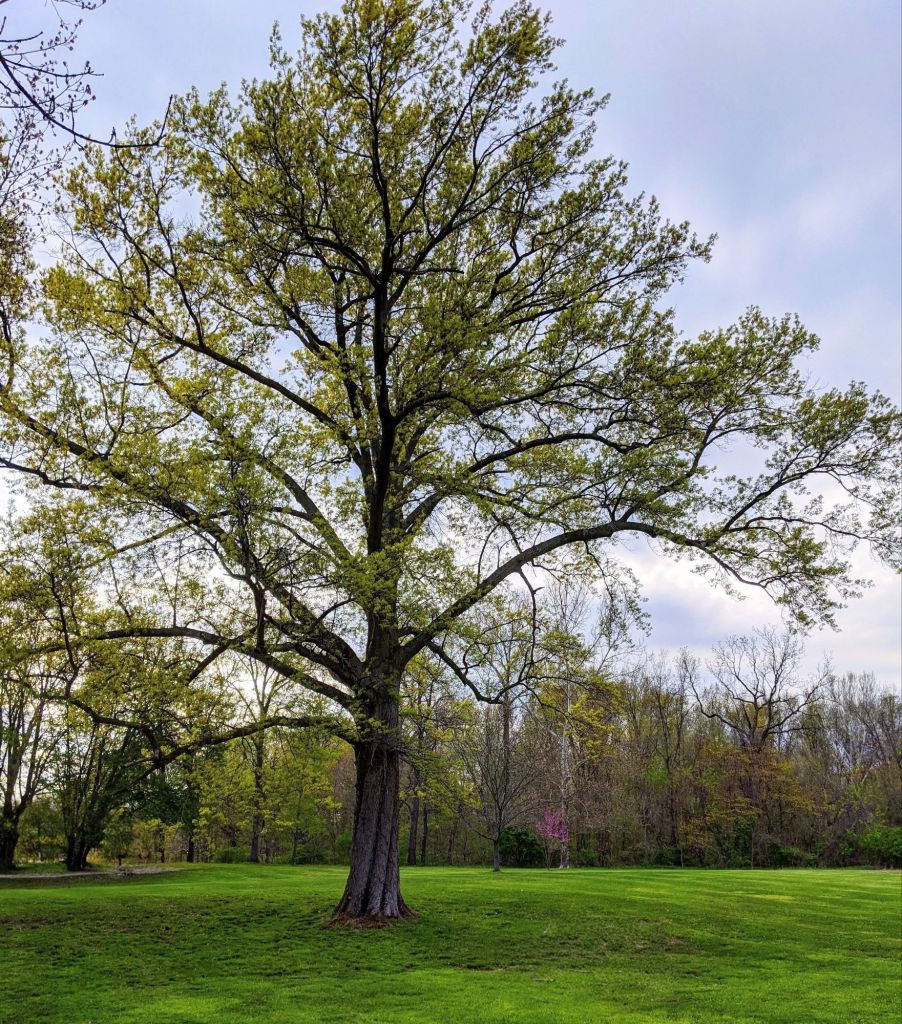
My children named this giant in our front yard, “The Tree of Life”. It still stands today. Photo by Lisa Paul.
Copyright ©2026 Lisa Paul. All rights reserved.
Written in response to Wea’ve Written Weekly’s Poetry Prompt
Hope’s prompt: Be the thing
Write a Dinggedicht: a poem that enters so deeply into a thing that the thing seems to speak for itself through image, texture, movement, and sensation alone.
Choose anything: an object, animal, plant, machine, weather pattern, body part, or natural phenomenon. Describe it from the inside out. Let its physical reality guide the poem: its weight, surface, rhythm, sounds, habits, decay, memory.
You may lean into the surreal. Let the thing dream, contradict itself, remember what it should not remember, or behave in ways that defy logic. But keep the poem grounded in the thing’s material presence. The strangeness should emerge naturally from the object itself, not feel imposed upon it.
Do not explain what the thing symbolizes. Let the thing be the meaning.
Guidelines
- Stay rooted in concrete imagery and sensory detail
- Avoid abstract explanation whenever possible
- Surreal elements are welcome if they grow organically from the thing itself
- Free verse or rhyme are both welcome
- 10–20 lines
Tips
- Try not to name the thing’s symbolic meaning directly; let the reader discover it through the experience of the poem
- For an example of the form, see Rainer Maria Rilke’s “The Panther”

